KPV (10mg)
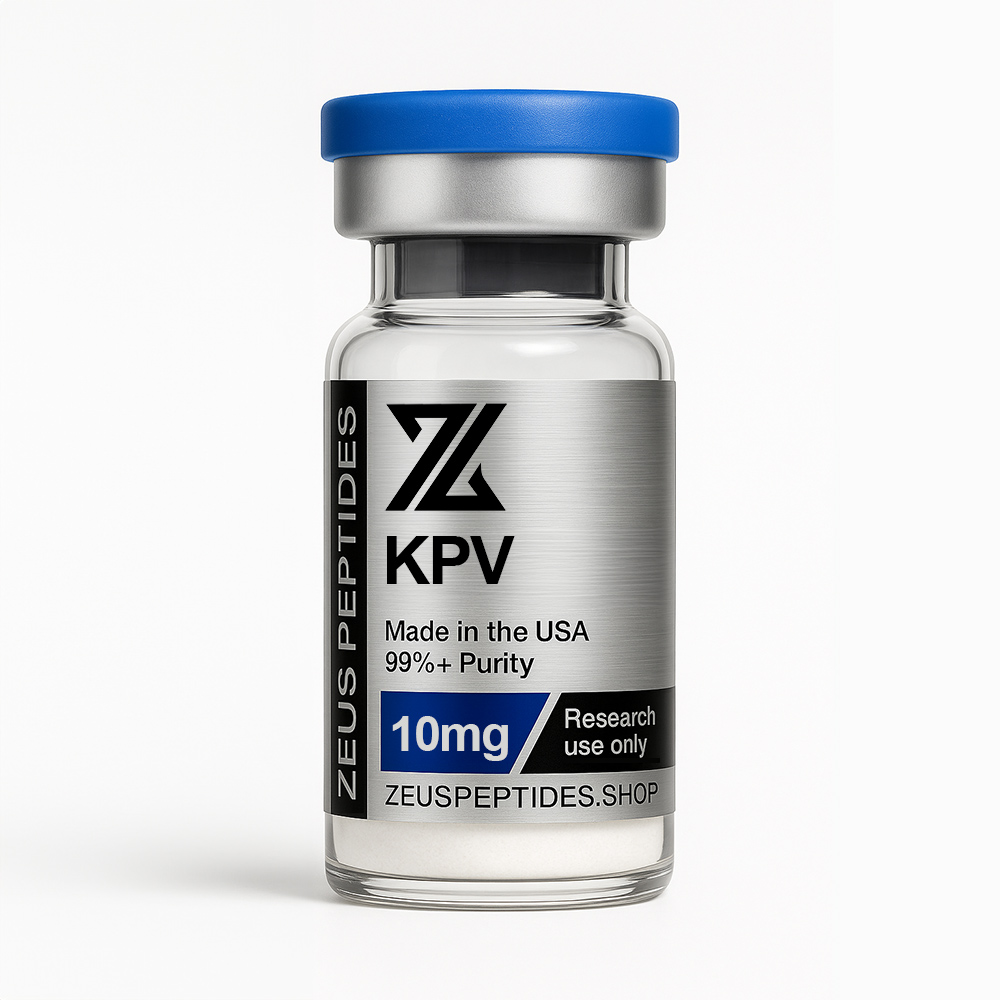
KPV (10MG) is a high-purity research peptide widely explored for its potential to support calmer skin, a healthier gut barrier, and a more balanced inflammatory response. Researchers value KPV for its simple but powerful tripeptide structure and its ability to interact with pathways tied to irritation, redness, and tissue stress. Studies often focus on how KPV may help support soothing skin environments, promote epithelial repair, and maintain gut integrity, making it a standout in wellness, recovery, and longevity research. Zeus Peptides delivers this 10MG formulation at 99%+ purity, independently verified for identity and stability, providing a trusted option for consistent, dependable research results.
$89.99
What is KPV 10mg?
KPV is an exciting synthetic tripeptide composed of Lysine–Proline–Valine (Lys–Pro–Val), derived from the active region of α-MSH. Researchers are drawn to this powerhouse fragment for its remarkable ability to support cellular balance, recovery, resilience, and overall wellness dynamics in experimental settings. As a minimal yet potent sequence, KPV is widely explored for its role in maintaining a calm internal environment and promoting tissue harmony. With Zeus Peptides’ elite 99%+ purity and USA-made precision, researchers can count on exceptional consistency and reliability.
What Are the Effects of KPV 10mg?
- Supports a calm, balanced internal environment, making it highly valued in inflammation-focused studies
- Promotes tissue and epithelial resilience for stronger recovery-driven research outcomes
- Encourages cellular harmony and repair in experimental gut and systemic models
- Explored for boosting overall wellness dynamics in advanced regenerative research
Chemical Structure of KPV 10mg
- Chemical Name: Lys–Pro–Val (KPV)
- Sequence / Formula: C₁₆H₃₀N₄O₄
- Molecular Weight: ~342.43 g/mol
- Structural notes: Minimal active fragment of α-MSH (11–13), recognized for stability and efficiency in targeted research applications.
The Zeus Peptides Advantage
- 99%+ purity — third-party lab verified
- Premium USA-made research peptides
- Exceptional stability and consistency for reliable results
- Trusted by researchers seeking elite-level performance insights
Research-Use Only Disclaimer
This product is provided strictly for research purposes only. It is not approved for human or veterinary use, nor is it intended as a dietary supplement or medical therapy. Handle only in a controlled laboratory environment by qualified personnel using proper biosafety procedures. Keep out of reach of children. Misuse may lead to unknown adverse effects. The information provided is for educational and research context only and does not represent medical advice or validated therapeutic claims.
Storage & Handling Information
Zeus Peptides products are prepared using an advanced lyophilization (freeze-drying) process designed to protect compound integrity. This method allows peptides to remain stable during transit for approximately 3–4 months without degradation.
Once a peptide has been reconstituted with bacteriostatic water, it must be stored under refrigeration to maintain its stability. After mixing, reconstituted solutions are generally stable for up to 30 days when kept cold.
Lyophilization—sometimes referred to as cryodesiccation—is a controlled dehydration technique in which peptides are frozen and placed under reduced pressure. This environment causes moisture within the vial to convert directly from ice to vapor, resulting in a dry, crystalline powder. In this unreconstituted state, peptides may be safely kept at room temperature until preparation is required.
After delivery, peptides should be shielded from light and excessive heat. For short-term use—ranging from days to several weeks or months—refrigerated storage below 4°C (39°F) is typically sufficient. Lyophilized peptides often tolerate room-temperature storage for limited periods, making this acceptable when use is planned relatively soon.
For extended storage lasting several months or longer, peptides should be placed in a deep freezer at -80°C (-112°F). Long-term freezing offers the highest level of stability and is the preferred method for preservation over time.