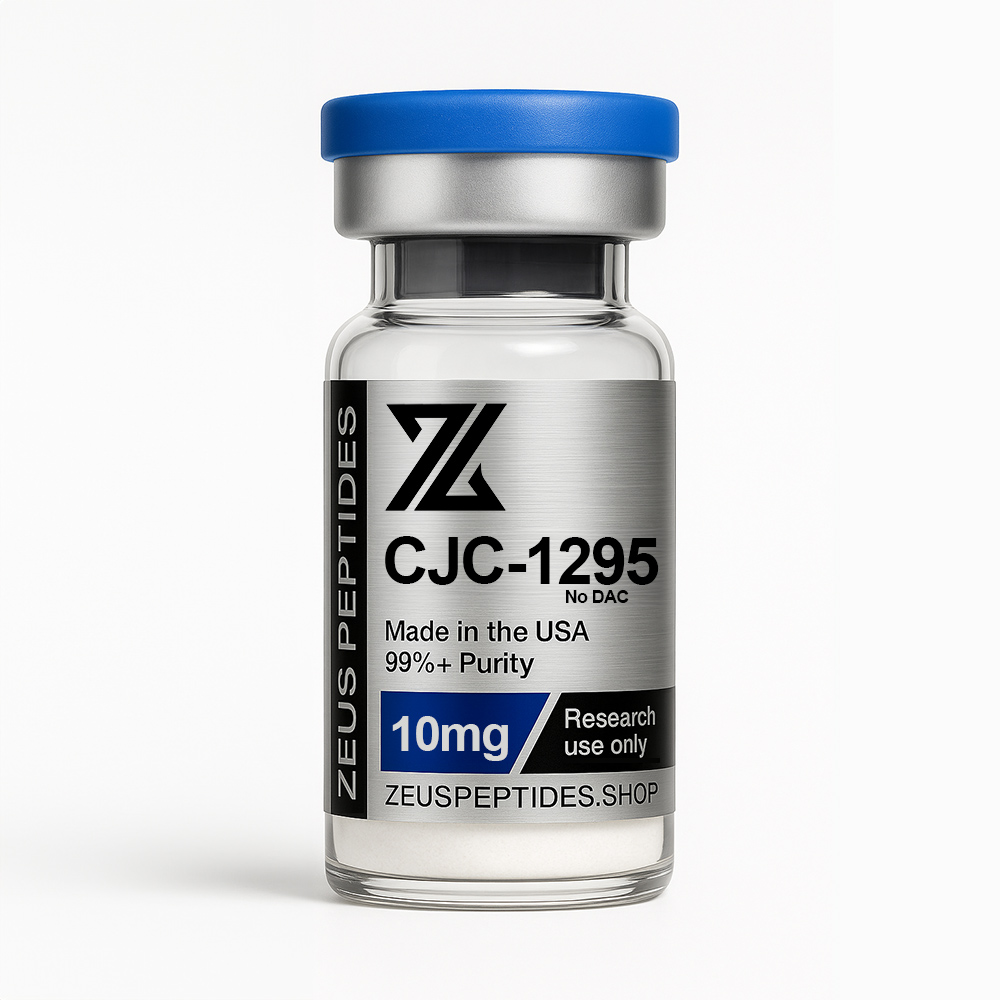
CJC-1295, No DAC (10mg)
CJC-1295 is a high-energy research peptide prized for its ability to support growth-factor activity, enhance recovery and regeneration insights, and fuel metabolic performance exploration. With Zeus Peptides’ ultra-premium 99%+ purity and USA-crafted precision, it’s the smart choice for researchers pushing the limits of cellular vitality studies.
$94.99
What is CJC-1295 (10MG)?
CJC-1295 is a powerful 29-amino-acid research peptide designed to mimic the natural signaling of GHRH with enhanced stability and performance. Scientists study this modified GRF (1-29) for its role in supporting growth-factor pathways, cellular rejuvenation, and high-level metabolic activity. With its optimized structure and impressive resistance to enzymatic breakdown, CJC-1295 is a standout tool for exploring recovery, regeneration, and performance-driven biological processes. Zeus Peptides delivers this compound with unmatched 99%+ purity and rock-solid USA manufacturing for precise, reliable research outcomes every time.
What Are the Effects of CJC-1295 (10MG)?
- Supports dynamic growth-factor signaling in research environments, giving insight into performance and regeneration pathways
- Encourages efficient cellular recovery responses linked to tissue renewal and metabolic balance
- Helps maintain stable, pulsatile research activity thanks to its enhanced structural durability
- Promotes exploration of body-composition and vitality markers in advanced laboratory models
Chemical Structure of CJC-1295 (10MG)
- Chemical Name: Modified GRF (1-29) / CJC-1295 No DAC
- Sequence / Formula: Tyr-D-Ala-Asp-Ala-Ile-Phe-Thr-Gln-Ser-Tyr-Arg-Lys-Val-Leu-Ala-Gln-Leu-Ser-Ala-Arg-Lys-Leu-Leu-Gln-Asp-Ile-Leu-Ser-Arg-NH₂
- Molecular Weight: Noted in research literature as consistent with a 29-amino-acid analogue
- Structural notes: Features strategic amino acid substitutions (positions 2, 8, 15, 27) that enhance stability and resist enzymatic degradation
The Zeus Peptides Advantage
- 99%+ purity — third-party lab verified
- Premium USA-made research peptides
- Exceptional stability and consistency for reliable results
- Trusted by researchers seeking elite-level performance insights
Research-Use Only Disclaimer
This product is provided strictly for research purposes only. It is not approved for human or veterinary use, nor is it intended as a dietary supplement or medical therapy. Handle only in a controlled laboratory environment by qualified personnel using proper biosafety procedures. Keep out of reach of children. Misuse may lead to unknown adverse effects. The information provided is for educational and research context only and does not represent medical advice or validated therapeutic claims.
Storage & Handling Information
Zeus Peptides products are prepared using an advanced lyophilization (freeze-drying) process designed to protect compound integrity. This method allows peptides to remain stable during transit for approximately 3–4 months without degradation.
Once a peptide has been reconstituted with bacteriostatic water, it must be stored under refrigeration to maintain its stability. After mixing, reconstituted solutions are generally stable for up to 30 days when kept cold.
Lyophilization—sometimes referred to as cryodesiccation—is a controlled dehydration technique in which peptides are frozen and placed under reduced pressure. This environment causes moisture within the vial to convert directly from ice to vapor, resulting in a dry, crystalline powder. In this unreconstituted state, peptides may be safely kept at room temperature until preparation is required.
After delivery, peptides should be shielded from light and excessive heat. For short-term use—ranging from days to several weeks or months—refrigerated storage below 4°C (39°F) is typically sufficient. Lyophilized peptides often tolerate room-temperature storage for limited periods, making this acceptable when use is planned relatively soon.
For extended storage lasting several months or longer, peptides should be placed in a deep freezer at -80°C (-112°F). Long-term freezing offers the highest level of stability and is the preferred method for preservation over time.